Division 0 · November 7, 2023
How Do You Write a Scope of Work?
In the world of construction management, success hinges on clear communication, meticulous planning, and precise execution. For a general contractor, when it comes to defining the scope of work for subcontractors, adopting a strategic approach can make all the difference. In this blog, we'll delve into a structured method that ensures clarity, alignment, and ultimately, a smoother construction process. We'll explore the benefits of this approach compared to less detailed broad-based statements.
Before we start, I do want to preface that the effort invested, and depth of a scope should be weighed against the type of scope and the value of work to be completed. Now without further ado.
1. General All-Encompassing Statements
General statements provide an overview of the work involved, setting the context for the subcontractor. However, they should be just that – general. They're the foundation upon which the specifics will be built. While it may seem tempting to only draft broad, sweeping statements to define a subcontractor's scope of work, this approach often leads to misinterpretation and inefficiencies. By opting for only general statements, important details can be lost in translation, leading to potential disputes and delays. Instead, our approach starts with comprehensive but well-defined general statements.
Examples from a roofing scope:
Provide a complete horizontal waterproofing system for everything at grade and above. Tie on-grade horizontal waterproofing, RT5, and RT6, details into the below grade waterproofing.
Supply and install all roofing types listed on the ‘Roof Type Schedule’; RT1, RT1A, RT2, RT3, RT3A, RT4, RT5, and RT6
I've encountered individuals who advocate for an exclusively broad-strokes approach, citing its utility in safeguarding against overlooked details. However, this philosophy can lead to more onerous negotiations and disruptions when disputes arise regarding what was initially included or omitted. Moreover, disagreements over project scope often manifest at the eleventh hour, introducing further delays to your project timeline. This is precisely why, at the project's inception, I dive into the minutiae, leaving no room for ambiguity by providing explicit descriptions of scope elements that could be misinterpreted or considered another trades scope. The subsequent steps outline the process I employ to establish scope clarity from the outset, pre-empting the need for mid-construction renegotiations.
2. Specificity in Scope Tie-Ins
One of the key advantages of this approach is the precision with which we define scopes that tie into another subcontractor's responsibilities. Construction projects are intricate puzzles, and subcontractor scopes often intersect. Rather than leaving these intersections to chance, we specify the exact nature of these connections, minimizing conflicts and ensuring seamless coordination. This could be the cladding system tying into glazing, or the electrified door hardware tying into the electrical system. Each of these leave ambiguities, and while you can try to argue what is the norm or expectation later, it is much easier to agree to it now. A scope gap discovered prior to construction is easy to address.
Ex: It is common that the window/glazing subcontractor installs the sill flashings and the cladding contractor installs the jamb and header flashings, but make sure this is detailed out.
Ex: For glazed aluminum doors with auto operators, specify who is supplying and installing the auto operators, push buttons and who is completing the low voltage wiring.
Ex: For parapets, who is supplying what AV membrane?
Ex: For flooring, if there is a discrepancy between a suspended slab concrete flatness tolerance and the flooring product requirements, who is completing the floor levelling?
3. Referencing and Marking Up Drawings
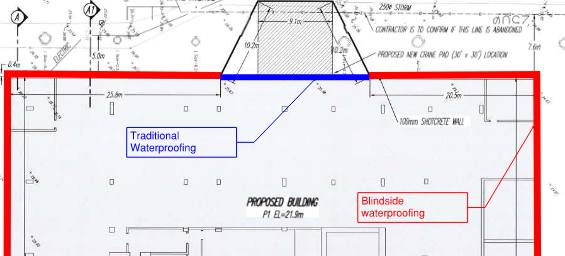
To avoid misunderstandings and clashes in work areas, referencing and marking up drawings and details are invaluable tools. By providing clear references to drawings and physically marking them up, we create a visual representation that leaves no room for ambiguity. This can be done to highlight different products in different areas or allocating what trade is installing which product on a specific detail.
4. Duration and Manpower Counts
A well-thought-out scope of work isn't just about the "what"; it's also about the "how long" and the "how many." By referencing durations and specifying manpower counts for major items, we create a stable framework that can adapt to schedule shifts without affecting the project's timeline. This proactive approach helps maintain project milestones and keeps the construction on track.
Ex. To complete electrical rough in will take 5 days per floor with 4 electricians.
5. Milestone Dates on the Master Schedule
Construction projects have numerous moving parts, and timing is everything. This approach ensures that major milestone dates are explicitly referenced on the master schedule. This aligns subcontractors with the broader project timeline, fostering accountability and synchronization.

Image by rawpixel.com on freepik
6. Superintendent's Review
Before the contract is awarded, our method includes a crucial step: having the project superintendent review the scope of work. Superintendent buy-in is crucial to a cohesive team. This ensures that the scope is not only comprehensive but also practical in terms of on-site execution. The superintendent's input is invaluable in refining the details for real-world application.
7. In-Person Collaboration
The power of face-to-face communication should never be underestimated. Sitting down with the subcontractor for an in-person review of the scope of work is a proactive step that fosters understanding and alignment. This collaborative approach minimizes the chances of misinterpretation and sets the stage for a productive subcontracting relationship.
The Benefits of a Detailed Approach
Now that we've outlined our strategic approach to writing a subcontractor scope of work, let's explore the compelling advantages it offers when compared to a broad-based statement approach:
Enhanced Clarity and Communication: A meticulously defined scope of work offers unparalleled clarity, reducing the potential for misunderstandings and disputes. Subcontractors can clearly understand their roles and responsibilities from the outset, fostering smoother project communication.
Proactive Issue Resolution: Detailed scopes of work allow for early discussions and negotiations with subcontractors. This proactive approach is far more effective and efficient than addressing issues and conflicts after they've arisen. It ensures that potential problems are resolved before they can escalate.
Cost-Efficient Dispute Resolution: While broad-based statements may appear legally advantageous in theory, the reality is that very few construction contracts end up in court. Practical experience shows that settling disputes at contract award or through negotiations is substantially more cost-effective than pursuing legal action.
In essence, investing time and effort in creating a comprehensive scope of work pays off not only in terms of project clarity and efficiency but also in avoiding costly disputes and litigation. Proactive discussions and negotiations at the outset lead to more harmonious subcontractor relationships and, ultimately, successful construction projects.
Closing it out
For construction project managers, choosing the right approach to crafting subcontractor scopes of work can make all the difference between project success and potential setbacks. While the pressure is high at the start of a project to award trades quickly, taking the extra time to complete a more structured and comprehensive scope of work and award will pay off through construction. By providing clarity, enhancing coordination, and strengthening relationships, our method sets the stage for construction projects that run smoothly and achieve success!
Comments
No comments yet.