Division 13 · September 12, 2023
Let's Build a Pool
Aquatic centers play a massive role in many communities. It is a place that people come to not just swim competitive laps, but to enjoy time with their families, teach children to swim, socialize with friends, and simply, to just relax. Don’t take my word for it, a study titled “The Social Impact of the National Aquatic Industry” 1 performed by Swinburne University of Technology and Royal Life Saving Society – Australia showed many positive benefits of aquatic centers. Two of their findings included:
“that aquatic facilities and their programs provides places and programs that encourage all types of health – physical, mental and functional.”
“that aquatic facilities and their programs can play a critical role in creating social connection and reducing social isolation for at-risk members of our community. For some aquatic facility users, the pool or program may be their only opportunity for regular and genuine social interaction.”
Building an aquatic center pool that's truly top-notch is a blend of design, engineering, and functionality. I have been fortunate to work alongside one of the best aquatics experts in the industry, Dominic Ries. With that expertise to pull from, I'm excited to guide you through the fundamentals of constructing a concrete pool that's the centerpiece of your aquatic center. We'll be diving deep into this world, exploring everything from innovative design features to the inner workings of filtration and plumbing systems.
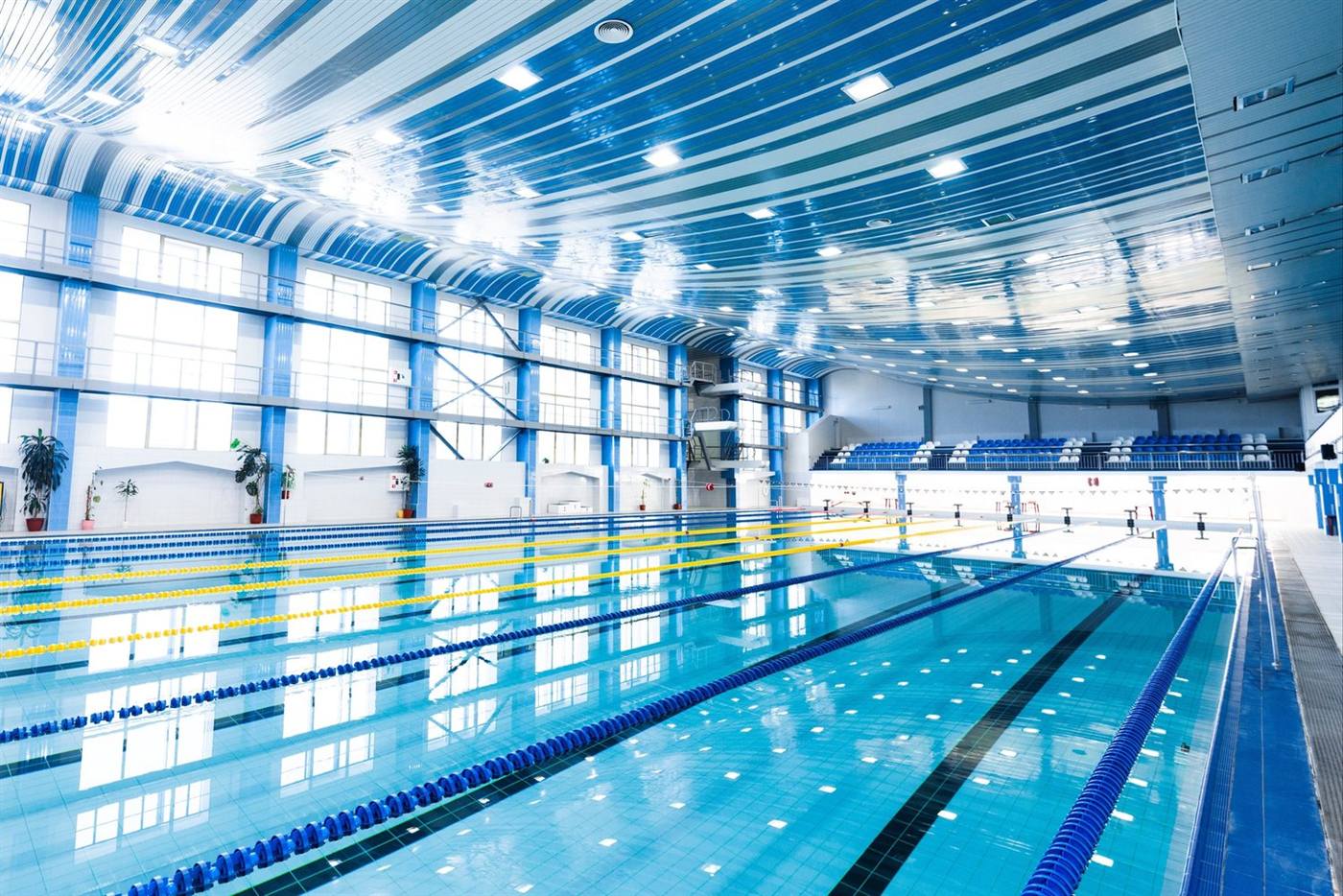
Image by Freepik
1. A Pool is just a Watertight Box
When it comes to crafting watertight concrete pools, attention to detail is paramount. Here are key steps to ensure a leak-free and enduring pool:
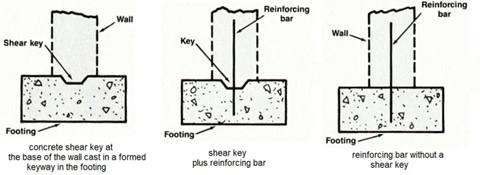
Keyway Integration: Incorporate a keyway in the pool floor to eliminate cold joints, enhancing structural integrity and preventing potential leaks.
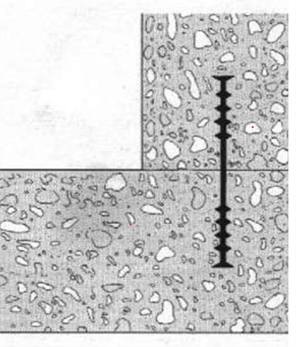
PVC Bulb-Type Waterstop: Opt for a reliable PVC bulb-type waterstop during installation. This barrier offers effective waterproofing, safeguarding the pool against water infiltration.
Prioritize Pipe Support: Strategic planning for pipe support is crucial. Whether adopting the "hang from deck" method or others, proper backfill and support materials are essential for long-term stability.
Consider "Chasing" Pool Piping: Streamline installation and maintenance by running pool piping outside the pool footprint, known as "chasing." This approach optimizes space and accessibility.
Pressure testing should be performed with water. Pipes under pressure can be extremely dangerous and can inadvertently cause damage and injury. For this reason, all pool piping should be pressure tested using water filled lines. Air filled lines are unpredictable and create a potential pipe bomb scenario that may explode, sending fragments flying. The typical rule of thumb is to pressure the system to 1 ½ times the operating pressure designed for the pool system.
Winterizing with RV Antifreeze: During construction, the pool piping may sit encased in concrete in an unheated space through a winter season. Simple pipe protection can be achieved by using RV antifreeze in the pneumatic test. This will allow peace of mind that the pipes can withstand lower temperatures during the colder months. It is important to note that RV antifreeze is non-toxic, but still requires responsible disposal once the test is over. Be mindful of varying test requirements and seasons, and address this early in the project timeline.
Static Test for Precision: Implement a static test to identify measurable errors and imperfections. Define an acceptable water loss threshold during this test to ensure a rigorous assessment. This test is completed before the water proofing is applied. The concrete should have water-tight integrity through a well-executed pour.
Understanding "Bucket Test or Evaporation Test”: Familiarize yourself with the concept of a "bucket test.” This test is performed to determine if loss of water is due to a leak or evaporation. First, one needs to fill the pool, and it is important that the water is added at an appropriate temperature. The rule of thumb is that the water temperature should be within 2 degrees of the temperature of the walls. If the water is too cold it may cause the concrete to crack, think of it as adding cold water to a hot glass out of the dishwasher. The second step, you need to fill a bucket with pool water and place the bucket in the pool. Mark the height of the water inside and outside of the bucket. Then after 24 hours, the water in the bucket should have decreased in height the exact same as the pool water outside. If this is not the case, you will need to start investigating!
By meticulously following these steps, you're well-equipped to create a watertight concrete pool that excels in both durability and functionality.
2. Innovative Design Attributes:
Concrete pools offer unparalleled design flexibility, making them ideal for aquatic centers that demand uniqueness and durability. Consider these design attributes:
Shape and Size: Think beyond traditional rectangular shapes. Freeform designs with curves and varying depths can cater to diverse aquatic activities, from lap swimming to water aerobics.
Competition Features: Incorporate features like designated lap lanes, starting blocks, and underwater lighting for competitions and swim meets.
Zero-Entry Zones: Create gradual entry points to accommodate swimmers of all ages and abilities.
Diving Amenities: Design safe and compliant diving areas, including diving boards or platforms.
Mosaics and Tiles: Enhance aesthetics with vibrant tiles and mosaics that complement your facility's theme.
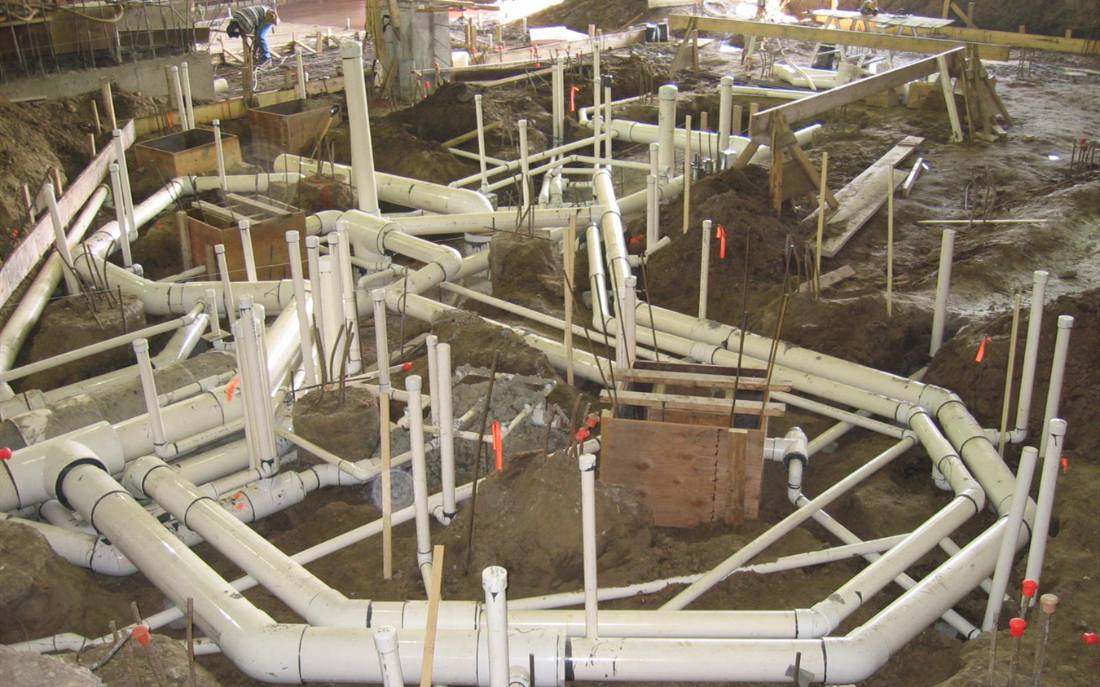
Lazy Rivers have been busy piping. Photo by Dom Reis
3. Vital Pool Design Considerations:
Designing an aquatic center pool goes beyond aesthetics; it's about optimizing functionality and user experience. Consider these critical attributes:
Drain and Pump Placement: Strategic positioning of main drains and pumps is vital for efficient water circulation. Main drains should be located at the deepest point to facilitate proper drainage. Placing pumps near the main drains maximizes water intake efficiency.
Drain Capacities: Calculate drain capacities based on your pool's size and usage. Commercial pools often require multiple main drains to comply with safety regulations and enhance circulation.
Overflow Systems: Incorporate overflow systems to maintain a consistent water level, especially during high bather loads. These systems prevent water from splashing out and help maintain water quality.
Gutter Systems: Consider installing gutter systems along the pool's edge. These help collect surface water and direct it back to the filtration system, enhancing water clarity.
Diving Area Specifications: If your pool includes a diving area, adhere to specific depth and design guidelines for safety. Ensure diving boards or platforms are appropriately positioned.
Deck Space: Plan for ample deck space around the pool for lounging, seating, and circulation. This space is essential for the safety and comfort of swimmers.
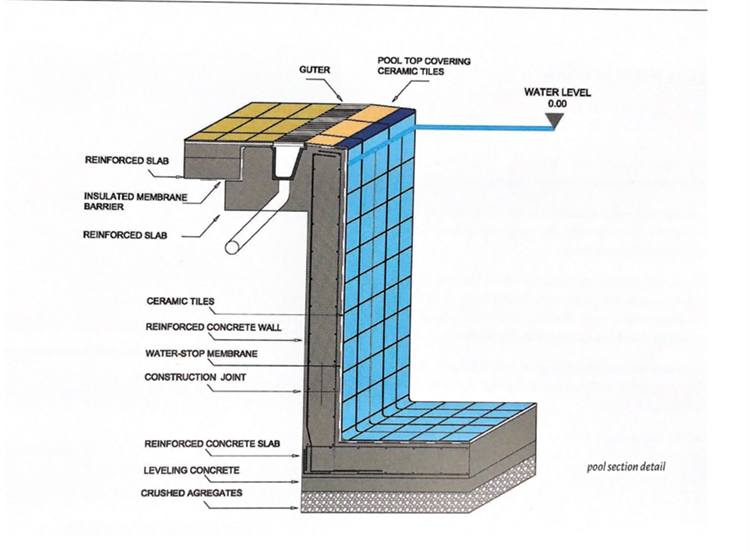
Section by laticrete
4. Key Elements of a Filtration System for Swimming Pools
In the realm of effective pool maintenance, the advanced filtration system takes center stage, ensuring optimal water quality that aligns with top standards. Let's delve into the core components that comprise this key system. From the pivotal functionalities to the proactive measures against contaminants, here are the integral parts:
Main Drains:
Operating as the plumbing cornerstone, main drains facilitate consistent water circulation. Typically positioned at the pool's lowest point, they contribute to the prevention of stagnant areas and the seamless transport of water towards the filtration system, enhancing overall water clarity.
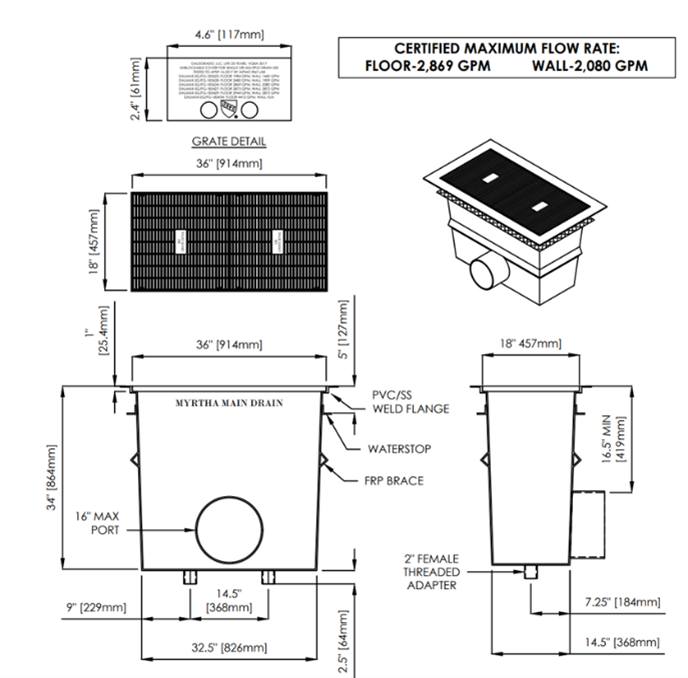
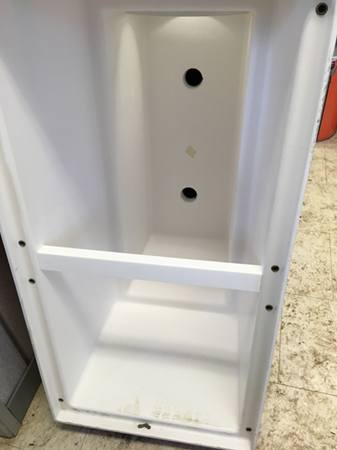
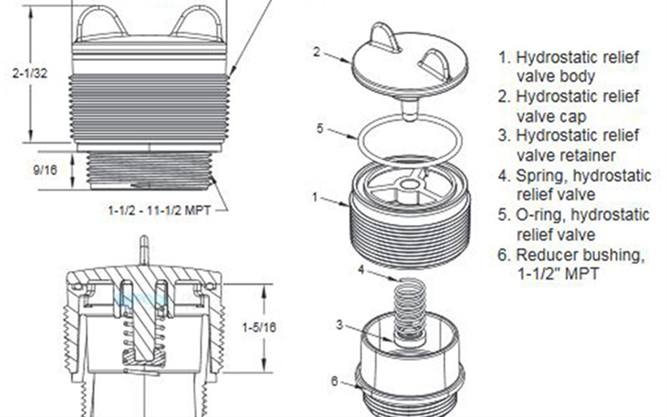
Details provided by Dom Reis
Commercial-Grade Pump:
The heartbeat of the system, a commercial-grade pump is an essential piece in aquatic centers. Designed to meet the demands of high bather loads, it efficiently maintains the necessary water turnover rates, contributing to optimal pool hygiene and functionality.
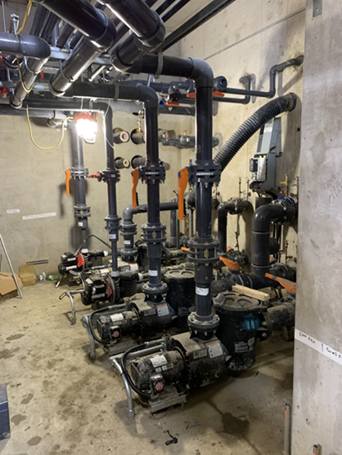
Photo by Dom Reis
Filters: Sand, Cartridge, and DE:
This triad of filters ensures a multi-layered approach to maintaining water purity. The sand filter effectively captures larger debris, the cartridge filter targets intermediate particles, and the DE filter focuses on the removal of microscopic impurities, collectively resulting in a well-balanced and clean pool environment. Each filter type creates a different situation for flow rates and sizing of pumps.
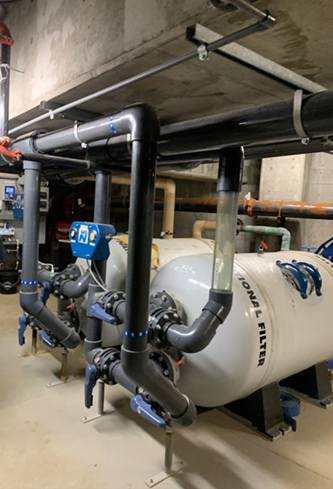
Photo by Dom Reis
Heater: A comfort provider, the pool heater extends the utility of the pool beyond seasonal limitations. Whether fueled by gas or solar energy, the heater transforms water temperature, offering swimmers a comfortable experience throughout the year.
Chemical Management: Underpinning water chemistry, chemical treatments play a critical role in maintaining the pool's balance and safety. With substances like chlorine and pH stabilizers, these measures work consistently to ensure optimal water conditions for swimmers.
Inlets: Strategically placed inlets facilitate water return to the pool after undergoing filtration. By evenly distributing treated water, they minimize stagnant zones and enhance water circulation, contributing to the overall water quality and clarity.
UV-A, B &C Sanitization: Harnessing the power of UV-C light, this technology serves as an added layer of protection against microbial agents. Effective in neutralizing bacteria and viruses, UV-C systems reduce the reliance on excessive chemical treatments, promoting a healthier and eco-friendly pool environment.
The intricate components of a pool filtration system collaborate to deliver a clean and inviting swimming experience in your aquatic center's pool.
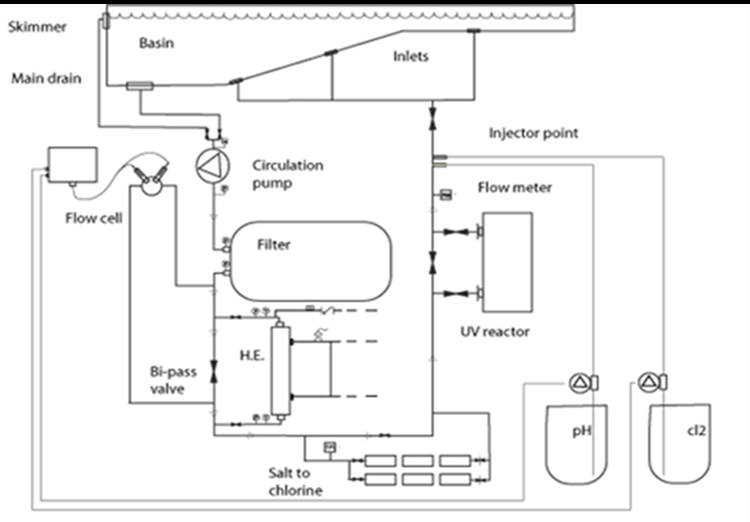
Pool Schematic
5. Plumbing System Expertise:
A well-designed plumbing system ensures proper water circulation, minimizing dead zones and enhancing water quality. Here's a breakdown of plumbing considerations, including recommended pipe types:
Main Drains and Skimmers: Use schedule 40 PVC pipes for main drains and skimmers. These pipes are durable and have a high flow capacity, ensuring efficient water intake.
Return Lines: Opt for schedule 40 PVC pipes for return lines as well. These pipes can handle the pressure needed to circulate water back into the pool.
Water Features: For features like waterfalls and fountains, consider using flexible PVC pipes. These pipes are versatile and can be shaped to accommodate various designs.
Heater Lines: Utilize schedule 80 CPVC pipes for heater lines. These pipes have thick walls and are designed for smoke and flame tolerance. The chemical composition can handle the high temperatures produced by heaters.
Conclusion:
Designing and building a concrete pool for your aquatic center demands a balance between creativity and functionality. By embracing innovative design attributes and prioritizing advanced filtration and plumbing systems, you're on track to create an aquatic space that captivates swimmers while maintaining optimal water quality. Collaborate with professionals who specialize in commercial pool construction to ensure your vision comes to life seamlessly.
Comments
1 comment
This article highlights the profound impact aquatic centers have on communities, going beyond recreation to foster physical, mental, and social well-being. The emphasis on creating spaces that promote inclusivity, connection, and health is particularly meaningful, especially for at-risk groups who may find their only source of genuine interaction at such facilities.
The detailed breakdown of pool construction fundamentals is insightful. From leak prevention measures like keyways and waterstop systems to innovative design features like zero-entry zones and diving areas, it's evident how much thought goes into building a space that serves diverse needs. The safety-first approach to pressure testing and winterizing pipes shows a commendable focus on durability and user safety.
As someone who values community-focused projects, this is a fantastic resource for anyone involved in aquatic center design or management. It's inspiring to see a blend of engineering precision and creativity in a field that impacts so many lives positively.